
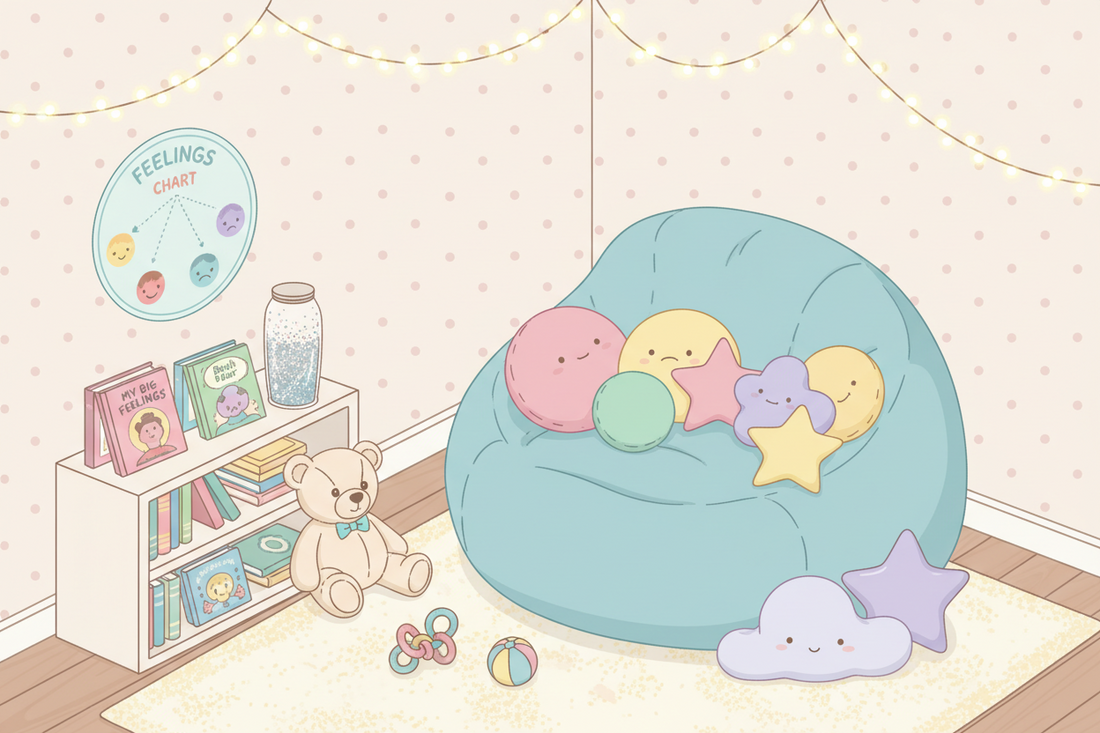
It's 5:47 on a Tuesday. Dinner is half-cooked, your youngest is melting down over the wrong color cup, and you're standing in the middle of the kitchen trying to remember where you put the thing that usually helps. Was it the squishy ball? The little breathing light? You know you own something calming — you just can't find it when the storm actually hits.
If that sounds familiar, you don't need more stuff. You need a system. A calm down kit is simply a small, gathered-in-one-place collection of tools that help a child move from overwhelmed back to okay — and having it ready before the meltdown means you're not scrambling in the moment.
This is your complete, no-fluff guide to building one. We'll walk through what actually belongs in a calm down kit, organized by the senses, with a DIY option and a done-for-you option for every category. At the end, there's a free one-page printable checklist you can stick on the fridge or tuck into the bin.
What Is a Calm Down Kit, Really?
A calm down kit is a container — a shoebox, a zippered pouch, a small drawer — holding a handful of tools a child can reach for when big feelings show up. The goal isn't to stop the feeling. It's to give kids a concrete, hands-on way to ride it out and settle their nervous system.
The best kits share three qualities. They're portable, so the kit works in the car, at grandma's, or in a classroom cubby. They're screen-free, because a tablet might distract a child but it doesn't teach them how to self-regulate — and the whole point is to build a skill they carry for life. And they're personal, tuned to what actually soothes your child, since a tool that calms one kid can overwhelm another.
Keep that last point close as you read. This checklist is a menu, not a mandate. Pick what fits.
Build Your Kit by the Five Senses
Organizing by sense is the simplest way to make sure your kit covers the different ways kids self-soothe. Some children calm through touch, others through sight or sound. Aim for one or two items per category and you'll have a well-rounded kit without the clutter.
1. Touch (Tactile & Fidget)
Hands are often the fastest route to calm. Tactile tools give restless energy somewhere to go.
DIY it: A homemade sensory bottle (clear bottle, warm water, a squirt of glitter glue, a handful of sequins — shake and watch it settle). A smooth “worry stone” from the backyard. A balloon filled with flour for a squishy stress ball.
Buy it: A set of fidget toys, a weighted lap pad, or a piece of soft, textured fabric like minky or velvet that a child can rub between their fingers.
2. Sight (Visual & Focus)
Visual tools slow a racing mind by giving the eyes something rhythmic and predictable to follow.
DIY it: A “glitter jar” (the same sensory bottle above works beautifully — the slow drift of glitter is mesmerizing and gives kids a built-in timer for “watch until it settles”). Printed calm-down cards with simple faces or breathing shapes.
Buy it: A guided breathing light is the gold-standard here. A tool like Breathing Pal glows and dims in a slow, steady rhythm — the child simply breathes in as the light grows and out as it fades. No screen, no app, no instructions to read in the middle of a meltdown. Just a soft, animal-shaped friend that shows them what calm breathing looks like. It's often the single most-used item in the kits parents build.
3. Sound (Auditory)
Sound can either be the thing that tips a child over the edge or the thing that brings them back. For sound-sensitive kids, soft and steady wins.
DIY it: A short, calming playlist queued up on a simple audio player (not a screen). Rain sounds. A recording of your own voice reading a favorite short story.
Buy it: A screen-free sound soother that plays gentle white noise or nature sounds at the press of a button, or a set of noise-reducing headphones for kids who need less sound rather than more.
4. Smell (Aromatic)
Scent is wired straight to the emotional brain, which is why a familiar smell can settle a child almost instantly.
DIY it: A cotton ball with a single drop of a kid-safe scent (always check age guidance) sealed in a small tin. A homemade “smell jar” with dried orange peel and a cinnamon stick.
Buy it: A scented plush or a small aromatherapy dough. Keep it subtle — a little goes a long way, and strong scents can backfire.
5. Movement & Grounding
Sometimes a body needs to do something before it can be still.
DIY it: A laminated card listing three grounding moves — “push the wall for 10 seconds,” “give yourself a bear hug,” “stomp like a dinosaur five times.” A stretchy resistance band for pulling.
Buy it: A wobble cushion, a mini balance board, or a chewable necklace for kids who seek oral input.
Don't Forget the “How-To” Cards
The tools matter, but so does knowing what to do with them. Slip two simple visual cards into the kit: one showing a breathing exercise (rainbow breathing or “smell the flower, blow out the candle” work well for little ones) and one listing the child's calm-down steps in order. When kids are flooded, they can't recall strategies from memory — a picture card does the remembering for them.
Want to practice the breathing part before you print anything? You can try free, screen-free-inspired breathing exercises online at palcompany.co/pages/playground — a good way to see which rhythm your child responds to before it goes in the kit.
A Few Assembly Tips
Build the kit with your child, not for them. When kids help choose what goes in, they feel ownership — and they're far more likely to actually reach for it. Let them decorate the box, too.
Introduce the kit during a calm moment, never mid-meltdown. Practice using it when everyone is regulated so it feels familiar, not like a punishment sprung on them at their worst. And revisit it every couple of months: kids grow, and a fidget that fascinated a 3-year-old may bore a 5-year-old.
One gentle note: a calm down kit is a support for everyday big feelings, and it may help support kids who struggle with regulation — but it isn't a substitute for professional guidance. If your child's distress feels frequent, intense, or out of step with their peers, a pediatrician or child therapist is the right next step.
Your Free Printable Calm Down Kit Checklist
Here's a one-page checklist to print, check off, and keep. Grab a small box and gather as you go:
Touch
- Sensory bottle or fidget toy
- Weighted lap pad or soft fabric swatch
- Squishy / stress ball
Sight
- Glitter jar
- Guided breathing light
- Calm-down picture cards
Sound
- Calming sound player or soother
- Noise-reducing headphones (if needed)
Smell
- Kid-safe scent tin or scented plush
Movement & Grounding
- Grounding moves card
- Wobble cushion / resistance band / chew tool
The How-To Cards
- Breathing exercise card
- “My calm-down steps” card
Print it, tape it inside the lid of your kit, and you'll never have to rebuild from memory again.
Ready to Start Building?
The best calm down kit is the one that's ready before you need it. Start with just two or three items your child already loves, add the how-to cards, and grow it from there.
If you'd like a screen-free centerpiece that does the calming and teaches the skill, our Breathing Pal and bundle sets were made for exactly these moments — no apps, no fuss, just a glowing friend that helps kids breathe.
And before anything ships or prints, try the free breathing exercises at palcompany.co/pages/playground. No download, no sign-up — just a calm first step you can take together tonight.


