
It's 10:47 on a Tuesday morning. You're mid-sentence explaining regrouping in subtraction when you hear the scrape of a chair, a crumpled worksheet hitting the floor, and a small voice that's already climbing toward tears. One student is overwhelmed. And now twenty-three other pairs of eyes are watching to see what happens next.
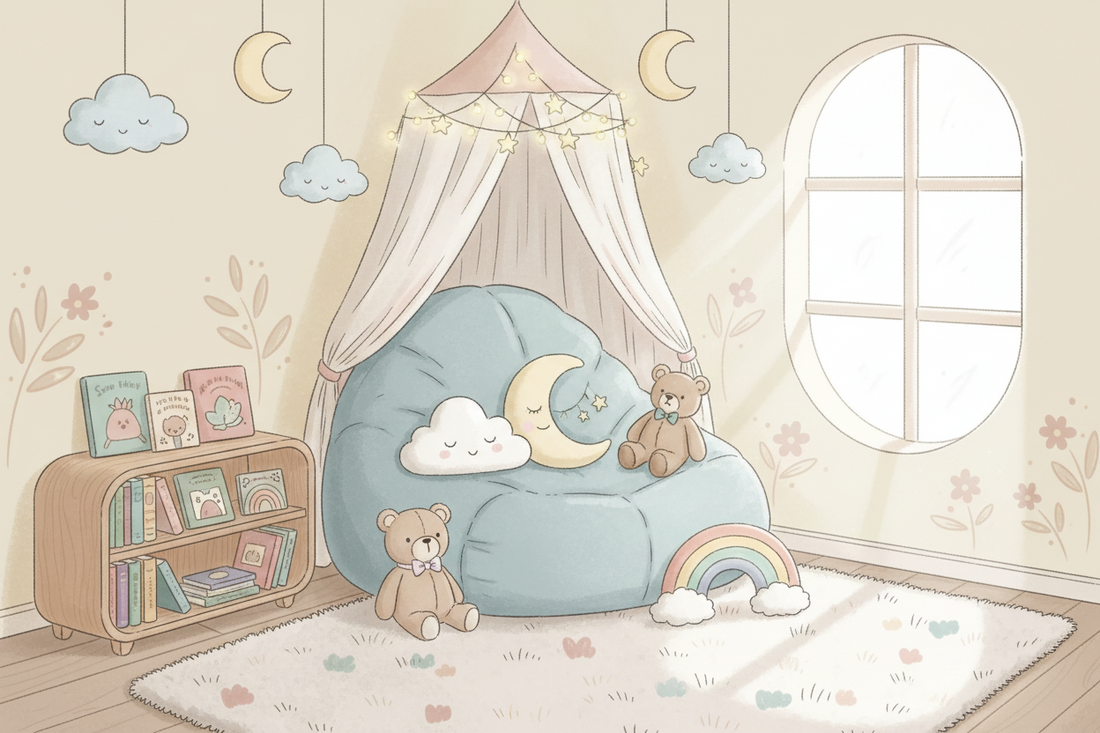
Every teacher knows this moment. The question isn't whether big feelings will show up in your classroom — it's whether your room has a place for them to go. A well-designed calm down corner gives a dysregulated child somewhere to land that isn't your lap, the hallway, or the principal's office. Done right, it's not a time-out spot. It's a tool that teaches kids to notice what they're feeling and do something about it, quietly, on their own.
Below are 15 calm down corner ideas that real teachers come back to year after year — organized so you can build one this weekend, whether you've got a spare bookshelf nook or just a corner of carpet and a laminator. At the end, you'll find three free printable posters you can put up today.
What a Calm Down Corner Actually Is (and Isn't)
Before the ideas, one quick reframe, because it's the difference between a corner that works and one that quietly becomes the "bad kid bench."
A calm down corner is a small, defined space where a child can go — by choice — to regulate their emotions before rejoining the group. It's stocked with tools that engage the senses and slow the body down. It is not a punishment, and kids should never be sent there as a consequence. The goal is self-regulation, not isolation. When children learn to recognize "I need a minute" and take that minute independently, you're teaching a skill that outlasts any single school year.
Keep that distinction front and center as you build, and the ideas below fall into place naturally.
Setting Up the Space
1. Define the boundary clearly
Kids regulate better in a space that feels contained and safe. Use a small rug, a pop-up tent, a tri-fold display board, or even painter's tape on the floor to mark where the corner begins and ends. A defined edge signals "this is a different kind of space" without needing a single word from you.
2. Face it away from the action
Position the corner so a seated child faces a wall or a quiet display rather than the whole class. Reducing visual input is half the battle for an overstimulated nervous system, and it gives the child a sense of privacy that makes the corner feel safe to actually use.
3. Add soft, low seating
A beanbag, a couple of floor cushions, or a small crescent pillow does more than add comfort — sinking into something soft gives the body gentle proprioceptive input that helps kids settle. Keep it to one or two spots so the corner stays a solo (or occasionally paired) space, not a hangout.
4. Soften the lighting
Overhead fluorescents are famously harsh for sensitive kids. A small battery lamp, a string of warm fairy lights, or a fabric canopy overhead can lower the sensory temperature of the whole corner. Even one warm light source changes how the space feels the moment a child steps in.
Tools That Do the Regulating
5. A breathing light the class can follow
This is the tool teachers mention most, and for good reason. A screen-free breathing light gently expands and contracts with a glow, and children simply match their breath to the rhythm — breathe in as it grows, out as it fades. There's no app, no screen, and nothing to read, which means even your youngest or most upset students can use it without instructions. Because it works without a device, it may help support kids who get more wound up by anything with a screen. A Breathing Pal sitting in the corner becomes the anchor tool the rest of the space is built around — and a classroom nine-pack means small groups can each have one during a whole-class reset.
6. A feelings chart at kid eye level
Children can't manage a feeling they can't name. A simple poster with faces and words — mad, worried, frustrated, silly, tired — gives kids language to point to even when they can't talk yet. Mount it low, right where a seated child's eyes land.
7. Fidgets kept in a "one at a time" bin
A small basket of textured items — a squishy ball, a length of chunky knit, a smooth stone, a stretchy band — gives restless hands something to do. Keep the bin small and set a clear "choose one" rule so the tools stay calming instead of becoming a pile of distractions.
8. A glitter jar or calm-down bottle
Shake it and watch the glitter settle. It sounds almost too simple, but the slow drift gives kids a visual "my feelings will settle too" metaphor and a natural timer — many children breathe easier just watching it drop. Cheap to make with a water bottle, glitter glue, and warm water.
9. Noise-reducing headphones
For sound-sensitive kids, a pair of over-ear headphones (no audio needed) can turn the volume of the whole room down enough to think. Wipe them between uses and they'll last all year.
10. A "squeeze and stretch" card
Physical release beats bottled-up tension. A small card showing wall push-ups, self-hugs, or pressing palms together gives kids a body-based option when breathing alone isn't enough. Movement helps the big feelings move through.
Structure and Routines
11. Post the steps as pictures, not paragraphs
An upset child can't parse a wall of text. A simple visual sequence — 1. Notice. 2. Breathe. 3. Choose a tool. 4. Rejoin us — walks them through the process with almost no reading required. You can also let kids rehearse the breathing step on our free Playground so the sequence feels familiar. (Two of the free printables below are built exactly for this.)
12. Add a visual timer to keep it a visit, not a vacation
A calm down corner works best as a short reset, not a place to disappear for the afternoon. A screen-free visual timer shows time shrinking as a shape or color drains away, so kids can see how long they've got left without you having to hover or nag. It quietly answers "how much longer?" and makes rejoining the group feel like a natural next step rather than an interruption.
13. Teach the corner when everyone is calm
Never introduce the space in the middle of a meltdown. Model it during a calm morning meeting: walk through each tool, let kids try the breathing light, practice the steps together. A corner kids already know how to use is one they'll actually reach for when they need it.
14. Give it a warm, neutral name
"Calm Corner," "Peace Place," "The Reset Spot," "Cozy Cave" — a friendly name keeps the space from ever sounding like a consequence. Let the class vote on it and you'll get instant buy-in.
15. Build in a gentle re-entry
Ending well matters as much as calming down. A simple check-in card — "I feel ready. I can rejoin my class." — or a quiet thumbs-up to you lets kids transition back on their own terms, with their dignity intact. That closing step is what turns a calm-down moment into a genuine regulation skill.
Free Printable Calm Corner Posters
To make setup easy, here are three ready-to-print posters designed for the corner. Print them, laminate them, and hang them at a seated child's eye level.
Poster 1 — "Belly Breathing in 4 Steps"
- Put one hand on your belly.
- Breathe in slowly — feel your belly grow like a balloon.
- Breathe out slowly — feel the balloon get small.
- Do it 4 more times.
Poster 2 — "My Calm Down Steps"
- Notice — "Something feels too big."
- Breathe — match the breathing light.
- Choose a tool — pick just one.
- Come back — "I'm ready."
Poster 3 — "How Big Is My Feeling?"
A simple three-level check-in — small, medium, big — with a face and a matching action for each level: small: take 3 breaths; medium: use a tool; big: ask a grown-up for help. Gives kids a way to size a feeling and pick a response.
A Corner Worth Building
The best calm down corner isn't the one with the most stuff — it's the one your students actually understand and reach for on their own. Start with a defined space, one reliable breathing tool, a visual for the steps, and a warm name. You can add the rest over time. If you're stocking several tools at once, our calm corner bundles put the essentials together in one go.
And if you'd like your class to practice the breathing before the hard moment arrives, you don't need to buy anything to begin. Try the free, screen-free breathing and calming activities at palcompany.co/pages/playground — kids can follow along right in the browser, no app, no download, no login. It's a simple way to build the skill on a calm afternoon so it's ready when the 10:47 Tuesday moment comes.


