
If your child struggles with anxiety — the racing thoughts, the tummy aches before school, the bedtime spirals — you're not alone. Childhood anxiety is one of the most common challenges parents navigate today. The good news: one of the most effective tools is also one of the simplest. Breathing. This guide covers 6 breathing exercises that actually work for kids, with step-by-step instructions and the science to back them up.
Why Kids Get Anxious — and Why Breathing Works
Anxiety activates the body's fight-or-flight response — a survival mechanism that floods the bloodstream with adrenaline, speeds up the heart, and makes breathing fast and shallow. This response is useful if you're running from danger. It's not so useful when you're sitting in a math class or trying to fall asleep.
Slow, controlled breathing does something remarkable: it directly activates the parasympathetic nervous system — the body's counterbalance to stress. Specifically, a slow, long exhale triggers the vagus nerve, which sends a signal to the brain that it's safe to stand down. Heart rate drops. Muscle tension eases. The mind slows.
Children respond to breathing exercises particularly well because their nervous systems are highly responsive and they haven't yet built up the mental barriers that make adults skeptical of simple solutions. Teach a child to breathe well and you're giving them a tool they'll use for life.
Signs Your Child May Benefit from a Breathing Practice
You might notice your child experiencing:
- Physical signs: rapid breathing, stomachaches before school, headaches, restlessness, difficulty sleeping, or a tight chest
- Emotional signs: frequent meltdowns, excessive worry about small things, clinginess, fear of trying new things, or trouble separating from parents
- Behavioral signs: avoidance of activities they used to enjoy, asking "what if" questions repeatedly, or shutting down when faced with challenges
These signs don't necessarily mean a clinical anxiety diagnosis — they may simply mean your child's nervous system is overwhelmed and needs tools to regulate. Breathing exercises are a great first step.
6 Breathing Exercises for Anxious Kids
1. 4-7-8 Breathing — Best for Sleep and Deep Calm
Breathe in through the nose for 4 counts, hold for 7, and exhale through the mouth for 8. The extended exhale is the key: it's the strongest breath-based signal for relaxation the body knows. Best used at bedtime or during moments of intense anxiety.
2. Box Breathing (4-4-4-4) — Best for Focus and Pre-Stress Preparation
Breathe in for 4, hold for 4, breathe out for 4, hold for 4. Equal sides, like a box. This technique restores calm without inducing sleepiness — ideal before a test, a difficult conversation, or any situation that needs mental clarity.
3. 5-5 Breathing — Best for Everyday Balance
Simply breathe in for 5 counts and breathe out for 5 counts. No holds required. This is the simplest technique and a great starting point for young children or for daily maintenance — a baseline calm to return to throughout the day. The Breathing Pal's third mode uses exactly this pattern.
How to do it: Sit comfortably. Breathe in slowly through the nose for 5 counts, then breathe out fully for 5 counts. Repeat for 1–2 minutes.
4. Belly Breathing (Diaphragmatic) — Best for Very Young Children
This is the foundational technique that all others build on. The goal is to breathe into the belly rather than the chest — activating the diaphragm and triggering a deeper, more restorative breath.
How to teach it: Have your child lie down and place a small stuffed animal on their tummy. Tell them to breathe in and try to make the animal rise. When they breathe out, the animal should gently fall. This makes the concept tangible and playful — perfect for ages 2–6.
5. Flower Breathing — Best for Toddlers
This is a visual, playful technique young children love. Hold up one hand with fingers spread wide like a flower. With the other hand, slowly trace up one finger (inhaling), then down the other side (exhaling). Move to the next finger and repeat.
Alternatively: pretend to smell a beautiful flower (slow inhale through the nose) then blow out a birthday candle (slow, controlled exhale through the mouth). Simple, memorable, and effective even for 3-year-olds.
6. Star Breathing — Best for Kids Who Need Visual Anchoring
Draw or print a five-pointed star. Have your child trace the outline with their finger: breathe in as they go up each point, breathe out as they go down. The visual and tactile combination helps children who need something to focus on — particularly effective for kids with ADHD or sensory processing needs.
When to Use Breathing Exercises: A Parent's Quick Reference
| Situation | Recommended Technique | Notes |
|---|---|---|
| Bedtime / trouble sleeping | 4-7-8 Breathing | 4–6 rounds lying down |
| Before school or stressful event | Box Breathing (4-4-4-4) | 3–4 rounds in the car or waiting room |
| Mid-meltdown | 5-5 Breathing or Belly Breathing | Guide them through it — breathe alongside |
| Daily calm-down habit | Any — rotate to keep it fresh | 1–2 minutes after school, before bed |
| Toddlers (ages 2–4) | Flower Breathing or Belly Breathing | Keep it playful and short |
| School-age children | Box Breathing or 4-7-8 | Children 5+ can typically manage the counts |
Making It Stick: How to Build a Breathing Habit
Practice together, not at them
The most common mistake parents make is introducing breathing exercises during a crisis — when their child is already too overwhelmed to try something new. Practice breathing when your child is calm so it becomes a familiar tool they can reach for when things get hard. Make it a game, a bedtime ritual, or something you do together in the car.
Make it fun with characters and visual tools
Young children respond to characters and visual cues far better than abstract counting instructions. Telling a 5-year-old to "breathe mindfully" will get you nowhere. Asking them to help Kyle the Koala breathe will get their full attention.
Be patient — results come with repetition
A breathing exercise practiced three times a week for two weeks will be dramatically more effective than one taught during a crisis. The goal is for these techniques to become automatic — something your child reaches for naturally when they feel overwhelmed.
Tools That Make Breathing Easier for Kids
One of the most common barriers to consistent breathing practice is the adult time and attention it requires. Counting with your child, guiding them through steps, and doing it consistently every night takes energy — especially on hard days.
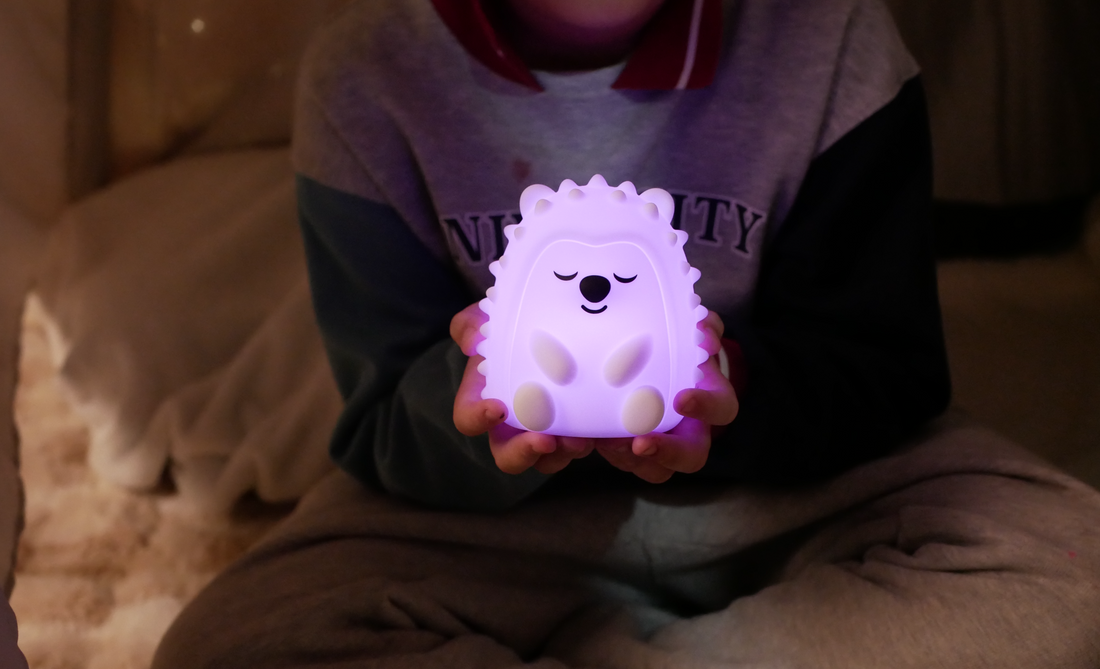
The Breathing Pal was designed to be a child's independent breathing companion. Each Pal — Kyle the Koala, Bonnie the Bunny, Ted the Bear, and Penny the Penguin — pulses gently with light, guiding kids through 4-7-8, box breathing, and 5-5 patterns without any adult guidance required.
No apps, no Wi-Fi, no screen time. One button. Up to 20 hours of battery life. BPA-free and designed for ages 3 and up. The Breathing Pal also functions as a soft night light, making it a natural part of any bedtime routine.
When to Seek Professional Help
Breathing exercises are a powerful tool, but they are not a substitute for professional support when anxiety is severe or interfering with daily life. If your child is consistently refusing school, unable to sleep, experiencing panic attacks, or withdrawing from friends and activities they used to enjoy, speak with your pediatrician or a licensed child therapist.
Breathing practice works best as part of a broader approach to supporting anxious children — alongside therapy, consistent routines, good sleep, and a strong relationship with caregivers. Think of it as one important tool in a larger toolkit.
Frequently Asked Questions
What age can kids start breathing exercises?
Simple breathing techniques like belly breathing and flower breathing can be introduced from age 2–3 with adult guidance. More structured techniques like box breathing and 4-7-8 work best from around age 5, when children can follow counting instructions. Adjust the complexity to your child's developmental stage.
How long should kids practice breathing exercises?
3–5 minutes daily is plenty for most children — just a few cycles of their chosen technique. Consistency matters more than duration. A short practice every day is far more effective than a long practice once a week.
Can breathing exercises replace therapy for anxious kids?
No — and they're not meant to. Breathing exercises are a complementary tool that supports emotional regulation, but children with clinical anxiety disorders need professional support. Think of breathing as a first-aid skill for the nervous system: incredibly useful in the moment, but not the whole treatment plan.
How do I get a resistant child to try breathing exercises?
Don't frame it as "something you need to do because you're anxious." Instead, make it a shared activity: "Let's try this cool thing I heard about." Lead by example — let them see you doing it. Use a visual tool like the Breathing Pal so it feels playful rather than therapeutic. And practice when things are calm, not in the middle of a meltdown.


