A child who once went to bed happily may suddenly be afraid of the dark, ask for the door to stay open, or need you nearby. You can take that fear seriously without treating the bedroom as dangerous. Start with reassurance, a comfortable amount of light, and a small plan you agree on together. There is no deadline for becoming comfortable in the dark.
Why fear of the dark starts
The American Academy of Pediatrics describes being alone in the dark as a common childhood fear. Worries may come and go, and frightening media or stressful experiences can contribute. Being scared does not mean your child is misbehaving or that you have done something wrong. AAP guidance on childhood fears emphasizes sympathy and support rather than pressure to be brave.
Ask about the problem during a calm moment: “Is it the shadow, the room being dark, or being away from me?” These are different worries. A coat making a strange shape calls for a different adjustment from wanting to know where a parent will be.
What can make bedtime harder
- Dismissing the feeling. “Don't be silly” does not tell a child what to do with the worry. Try “That feels scary to you. Let's work out what would help.”
- Frightening shows or stories. Review what your child has been watching or hearing, including content that seems mild to an adult.
- A sudden demand for complete darkness. Avoid making bedtime a test of courage. A small night light can be part of the plan.
- Changing several things at once. Keep the familiar parts of bedtime while trying one adjustment.
Comfort is appropriate. A hug, a calm explanation, or sitting nearby can be part of helping your child feel supported.
A gradual bedtime plan
Use these steps flexibly. You do not need to complete them in a particular number of days, and you can stay with an arrangement that works.
| Step | What to try | Check before moving on |
|---|---|---|
| Name the worry | Talk during the day. If a shadow is bothering your child, look at the object together with the lights on. | Can your child point to or describe what feels difficult? |
| Choose a comfortable setup | Agree on the night light, door position, and an age-appropriate comfort item. | Does the setup feel comfortable to your child, rather than simply looking right to you? |
| Make the evening predictable | Keep a familiar sequence such as washing, pajamas, a story, and a goodnight phrase. | Does your child know what comes next and how to ask for help? |
| Agree on adult support | Discuss where you will be. If you offer a check-in, choose an interval you can keep and return as promised. | If your child becomes more distressed, offer support and reconsider the plan. |
| Review together | Ask the next day what helped. Make a small change only when your child is comfortable trying it. | Keeping a dim light is an acceptable outcome; darkness is not the prize. |
The Chelsea and Westminster NHS sleep guide recommends adapting the bedroom to the child, including a small night light or an open door when needed. A predictable routine and familiar comfort items can also be useful. For a routine you can adapt, see our toddler bedtime routine guide.
The bedtime comfort plan: a child-sized script
Write these three prompts on a card together, or let your child draw a picture for each. Use the words as a starting point, not a test the child must pass.
- Notice: “I'm feeling scared. I can tell my grown-up.”
- Choose: “I can hold my comfort toy or look at my familiar room.”
- Connect: “My grown-up is nearby. I can ask for help.”
Fill in the practical details underneath: My light setting: ____ / My grown-up will be: ____ / Our check-in plan: ____. Revisit the card in daylight if it feels confusing at bedtime.
What to say when your child calls out
- “I hear that you're scared. I'm here to help.” Start with the feeling.
- “That shape is your jacket. Would moving it help?” Explain an ordinary cause when there is one.
- “Would you like your comfort toy, or would you like me to sit nearby for a little while?” Offer choices you can support.
- “Here is where I'll be. This is when I'll check on you.” Make a specific, realistic promise.
You can reassure your child that monsters are imaginary without arguing about the fear. Avoid teasing, threats, or using darkness as punishment.
Using a night light without making the room too bright
AAP sleep guidance allows for a small night light when a child fears the dark. Try the lowest level that provides useful comfort, with the light out of the child's direct line of sight. Color alone does not determine a light's effect on sleep; brightness, timing, and exposure matter too. Our red versus white night light comparison explains those distinctions.

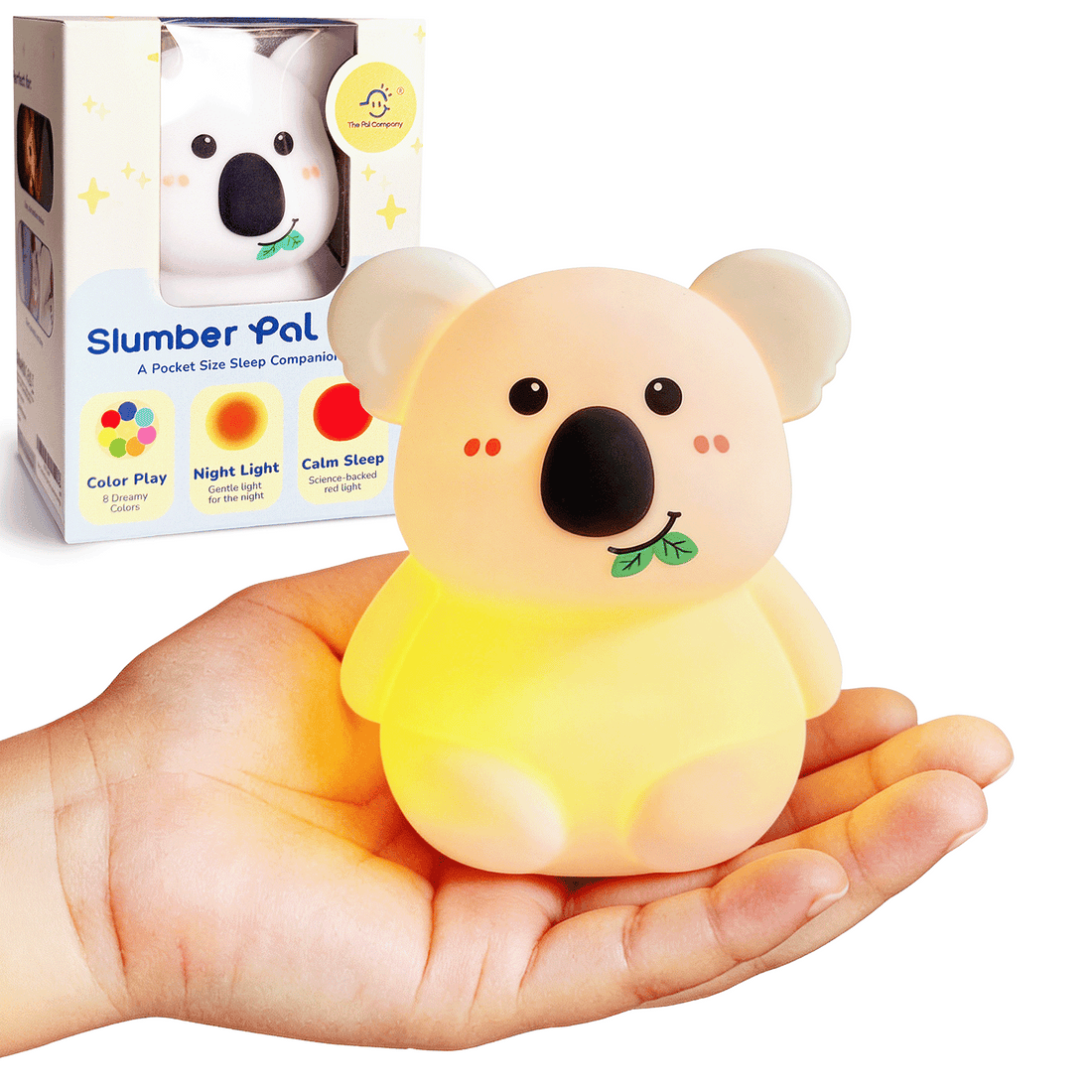
If you use Slumber Pal Mini Kyle, tap to adjust brightness in night-light mode. Its red-light mode has a 30-minute auto-off; night-light and color-play modes offer 30- or 60-minute timer settings. It is a night light, not a guided breathing device. Explain any automatic switch-off in advance and check whether that feature suits your child's needs. Follow the product instructions for placement and charging, and keep charging cords away from the sleep space.
When to get more help
Contact your pediatrician if fear is intense, persists, disrupts sleep or daily activities, follows a frightening event, or comes with worries in other settings. You do not have to wait a month or finish this plan before asking. The AAP notes that severe, persistent fears can interfere with everyday life and may need professional support.
Frequently asked questions
Should I leave a light on for a child afraid of the dark?
A small night light is a reasonable option. Choose a comfortable setting together; there is no requirement to remove it on a deadline.
How long does it take for fear of the dark to improve?
There is no reliable timetable for an individual child. Notice whether bedtime is becoming more manageable, and seek help if the fear is persistent or disruptive.
Is being afraid of the dark an anxiety disorder?
A common childhood fear alone does not establish a diagnosis. A pediatrician can help assess worries that significantly affect sleep or everyday life.
Tonight: one small change and a clear promise
Ask what feels scary, agree on a comfortable setup, and write down where you will be if your child needs you. The aim is a supported bedtime, not a performance of bravery.


