
What is 4-7-8 breathing? It's a simple technique where your child breathes in for 4 counts, holds for 7, and breathes out slowly for 8. This deliberate, extended exhale activates the body's natural calm response — helping kids feel less anxious, more focused, and ready for sleep.
If you've ever watched your child spiral into anxiety — heart racing, breath quick and shallow, unable to settle — you already know that telling them to "just calm down" doesn't work. But there's something that does: breathing.
Not just any breathing. The 4-7-8 technique is one of the most researched breathing exercises for calming the nervous system. It was popularized by Dr. Andrew Weil and is now used by therapists, pediatricians, and mindfulness educators around the world. And the best part? It takes about two minutes to teach and works almost immediately.
The Science Behind It (In Plain Language)
When we're anxious or stressed, our breathing becomes fast and shallow — which actually signals to the brain that danger is present and keeps the stress cycle going. Slow, controlled breathing does the opposite: it activates the parasympathetic nervous system (the body's "rest and digest" mode), lowers heart rate, and tells the brain it's safe to calm down.
The long exhale in the 4-7-8 technique is particularly effective. An exhale that's longer than the inhale is the strongest breath-based signal for calm the body knows.
How to Teach 4-7-8 Breathing to Your Child: Step by Step
-
Get comfortable. Sit or lie down somewhere quiet. Encourage your child to relax their shoulders and close their eyes if they want to.
-
Breathe in through the nose for 4 counts. Count together: 1… 2… 3… 4. Keep the breath slow and steady, filling the belly rather than the chest.
-
Hold for 7 counts. This is the most challenging part for younger children — count together out loud to help. 1… 2… 3… 4… 5… 6… 7.
-
Exhale slowly through the mouth for 8 counts. Make a soft "whoosh" sound. 1… 2… 3… 4… 5… 6… 7… 8. This is the magic step — the long exhale is what triggers the calm response.
- Repeat 3–4 times. After just a few cycles, most children will feel noticeably calmer. For bedtime, try 4–6 cycles while lying down.
3 Perfect Moments to Use 4-7-8 Breathing With Your Child
- Before bedtime: Use it as part of a wind-down routine. 3–4 rounds of 4-7-8 breathing signals to the nervous system that it's time to sleep.
- During a meltdown or moment of high anxiety: When your child is overwhelmed, guide them through one breath at a time. Don't expect them to do it independently at first — breathe with them.
- Before stressful events: School tests, doctor's appointments, performances — a few rounds of 4-7-8 in the car or waiting room can make a real difference.
How the Breathing Pal Makes 4-7-8 Breathing Easy for Kids
The challenge with breathing exercises and kids? Counting requires adult guidance — and in the middle of a meltdown or at bedtime, asking your child to count to 7 in their head is a big ask.
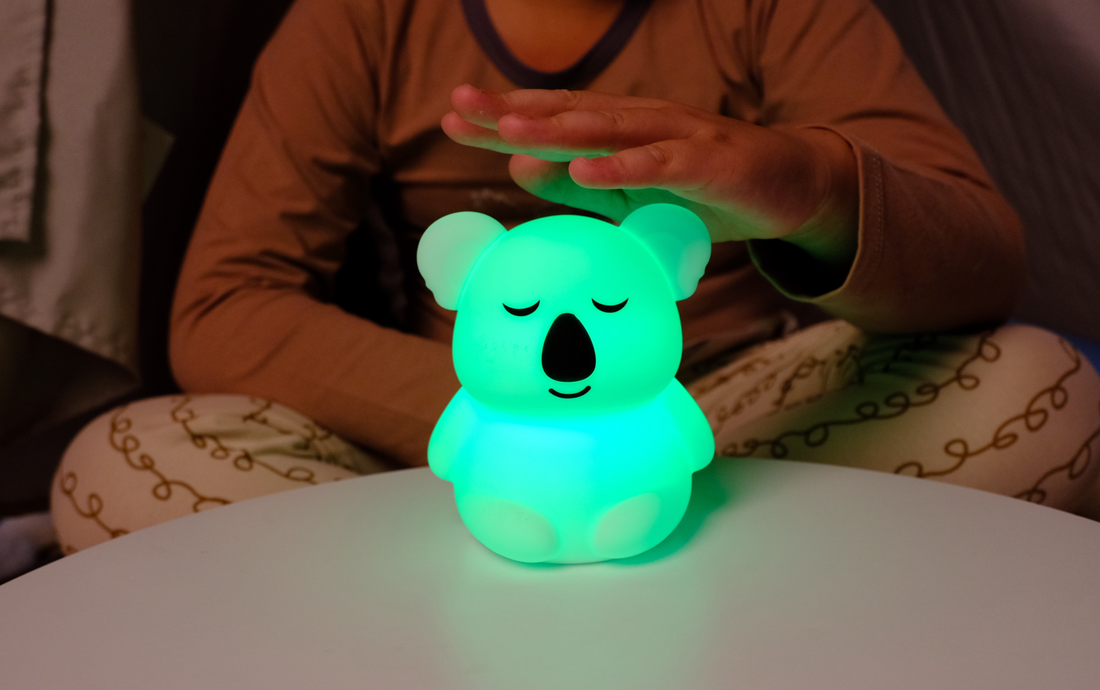
That's exactly what the Breathing Pal was designed for. Kyle the Koala (and friends) gently pulses with light — growing brighter as your child inhales, holding steady, and slowly dimming as they exhale. Your child just watches the light and breathes along. No counting required.
The Breathing Pal's 4-7-8 mode is built in — one button selects it, and the light does the guiding. It works as a calming night light too, so it can stay on after the breathing is done.
Frequently Asked Questions
Is 4-7-8 breathing safe for young children?
Yes, for most healthy children. The technique is gentle and non-invasive. If your child has asthma or a respiratory condition, check with your pediatrician before introducing breath-holding exercises. For very young children (under 4), skip the hold and focus on slow, long exhales instead.
What age should children start breathing exercises?
Children as young as 3–4 years old can learn simple breathing exercises with adult guidance. The 4-7-8 technique works well for children aged 5 and up. For toddlers, simpler techniques like "belly breathing" or "flower breathing" are a better starting point.
How often should kids practice?
Daily practice — even just one session of 3–4 rounds — builds the skill so it's available when your child really needs it. Think of it like a fire drill: you practice when everything's calm so you can use it when things aren't. Many families make it part of the bedtime routine.


